Frederick John Daborn

Home page

Appears as:

Born:

Parents:

Unit:


No.:

Rank:

Died:

Grave/Memorial: 
Daborn, Frederick J

6 February 1897, Woking, Surrey

Henry and Fanny (née Chowney)

4th Battalion, Leicestershire Regiment /
10th Battalion, Queen's Own (Royal West Kent) Regiment

6089 / G.18017

Lance Corporal

8 May 1918, Belgium, age 20

Duhallow ADS Cemetery, Ypres, Arrondissement Ieper,
West Flanders, Belgium: VII. A. 2
 
Biography:
Frederick John Daborn came from a very large family. He was born in Woking, on 6 February 1897, the son and youngest child
(of nine) of Henry, a labourer, and Fanny Harriet (née Chowney). His mother died six days later. In 1905, his father remarried, to
Elizabeth Chowney (née Balchin) and they had a further four children. Elizabeth also brought four children from her previous
marriage, making a total of seventeen.

Frederick enlisted in the Army Reserve on 8 December 1915, in Leicester. He gave his occupation as ‘cellarman’. He stood 5 feet
2¼ inches tall; his complexion was described as ‘even, fresh’; he had brown eyes and dark brown hair.

Frederick was mobilized with 4th Battalion, Leicestershire Regiment and posted to Belgium on 30 March 1916.

On 7 September 1916, Frederick was transferred to 10th Battalion, Queen's Own (Royal West Kent) Regiment. He was promoted
to Lance Corporal on 25 August 1917.

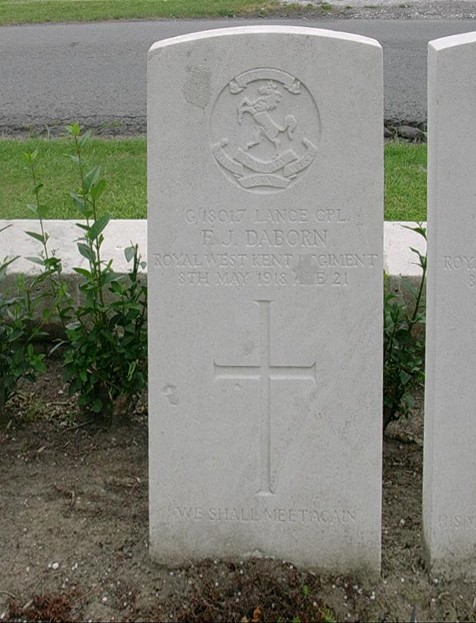
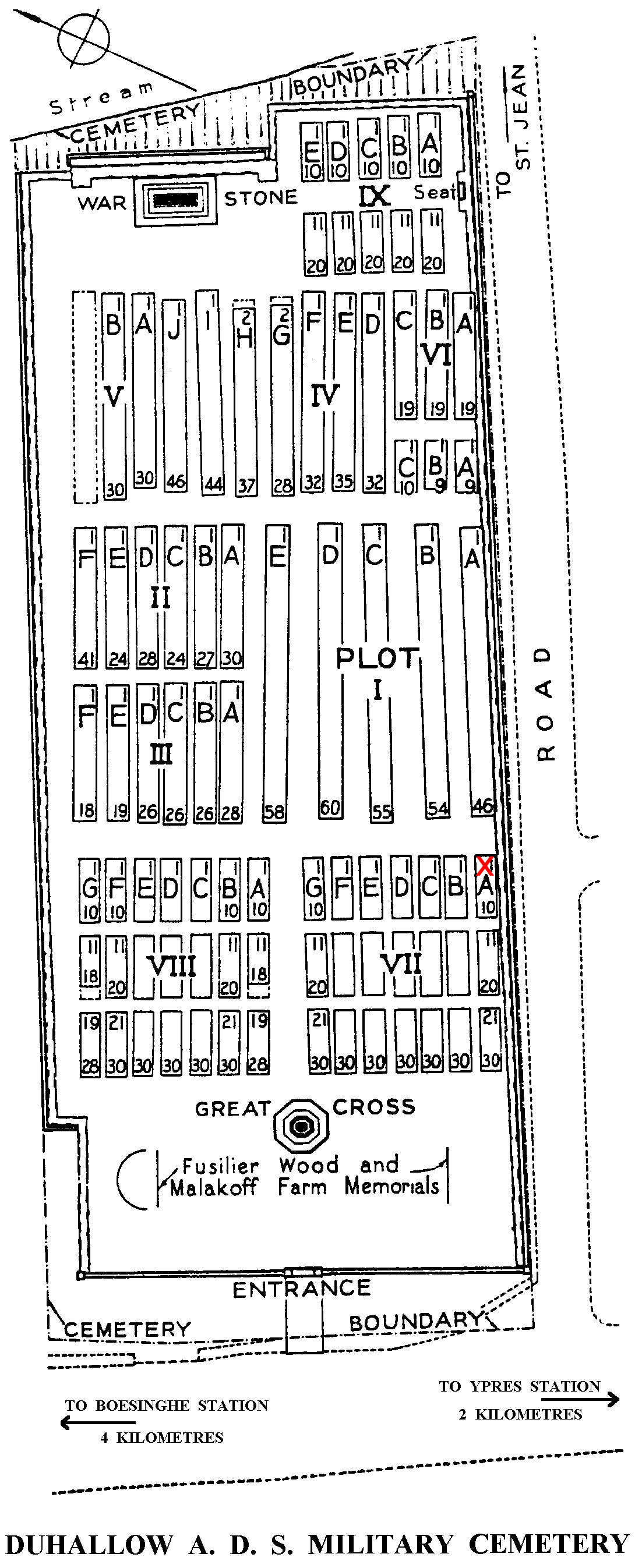
Frederick John Daborn was killed 8 May 1918. He is buried in grave VII. A. 2 within Duhallow ADS Cemetery, Ypres, Belgium.
His elder brother, William Henry Daborn, is also commemorated on St John’s War Memorial.


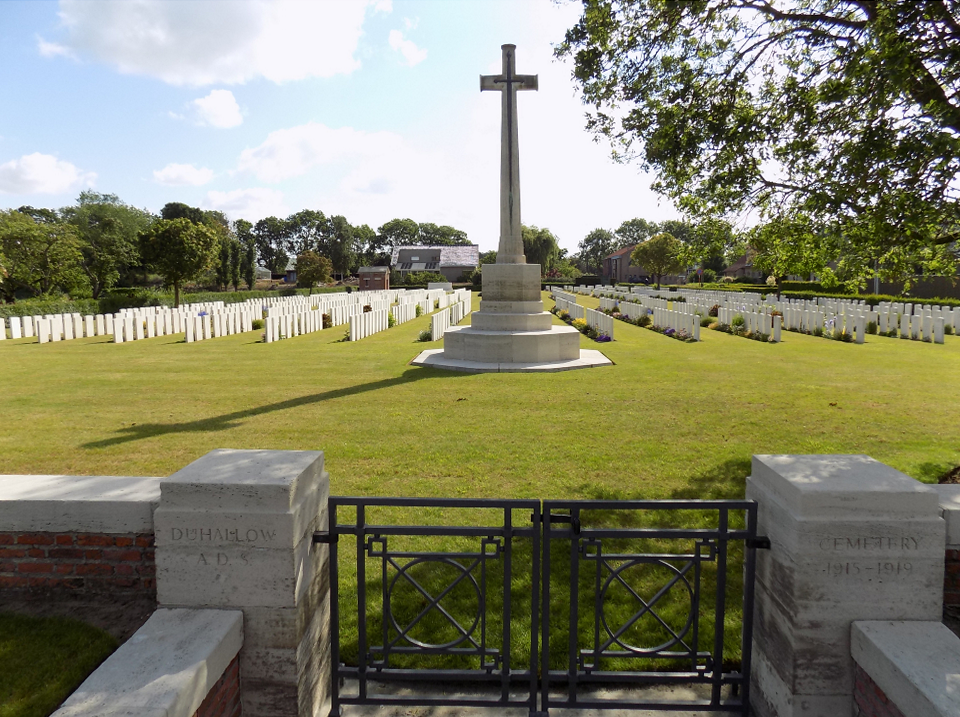
Duhallow Advanced Dressing Station, believed to have been named after a southern
Irish hunt, was a medical post 1.6 kilometres north of Ypres (now Ieper). The cemetery,
designed by Sir Reginald Blomfield, was begun in July 1917, on the day of the Battle of
Pilckem Ridge, and Plots I and IV were completed by November 1918. After the
Armistice, 633 bodies (of which 228 were not identified) were brought into this cemetery
from isolated graves and small cemeteries on the battlefields North, East, and South of
Ypres.

There are now 1,544 Commonwealth casualties of the First World War buried or
commemorated in this cemetery, 231 of the burials unidentified.